the founder journey
You start with belief. Skerpa gets you to evidence.
Follow Mateo, a solo founder with an idea he believes in.
Mateo has an idea he's convinced about.
He types it into skerpa. Instead of cheering him on, the coach interrogates it: who exactly has this problem? How do you know? What would have to be true?
It isn't a notepad. It's a thinking partner that pushes back.

Skerpa turns his unknowns into a plan.
Talk to five potential customers. Map your competitors. Mateo could keep building. Skerpa never blocks him. It just makes the risk of not knowing impossible to ignore.
Evidence informs. It never gates.

He runs the interviews and pulls them in.
Skerpa does the grunt work: extracting personas, pains and jobs-to-be-done from raw transcripts. Conversations become objects he can actually work with.
Five messy calls become a structured map.
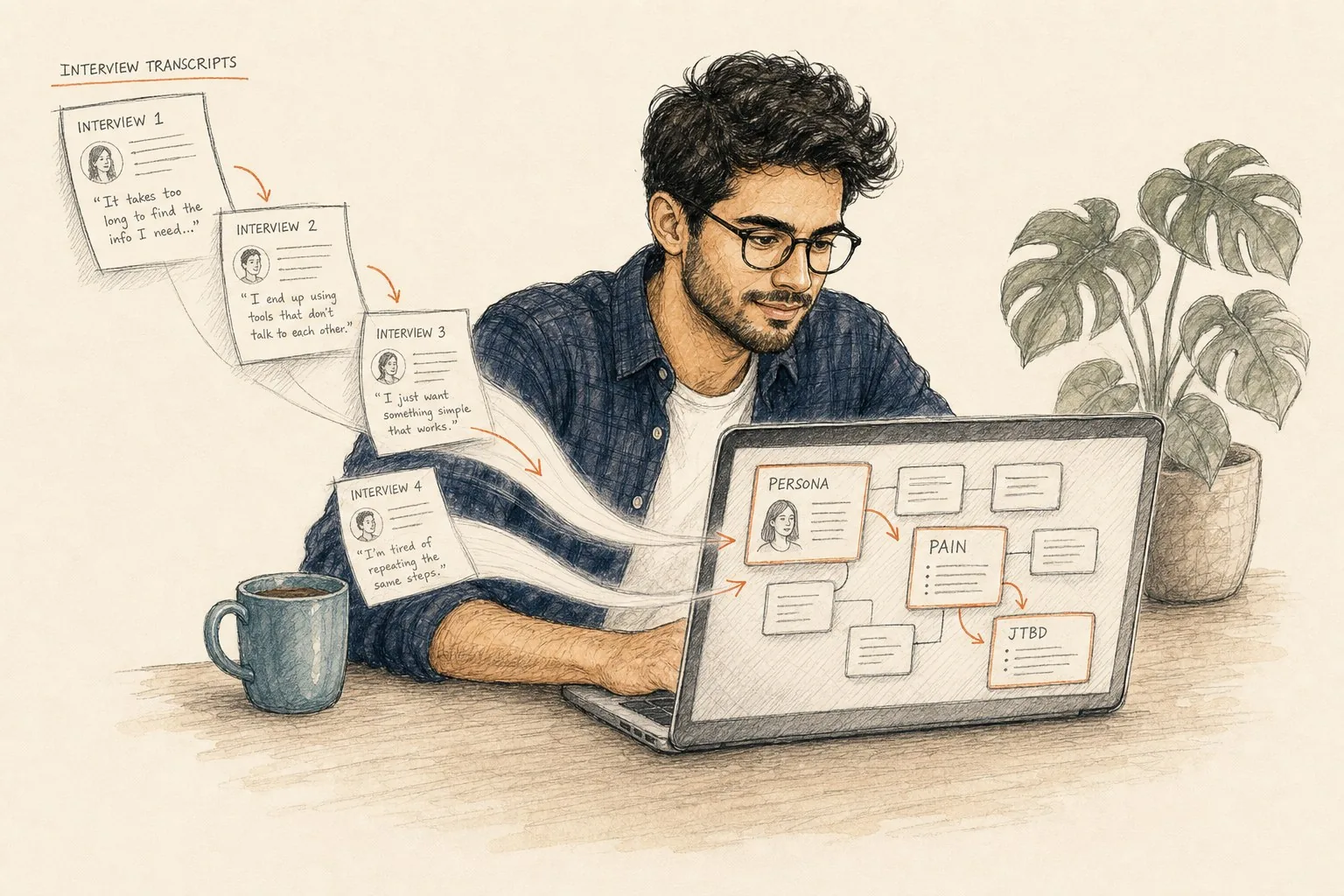
The same pain keeps surfacing.
Skerpa segments the interviewees and detects a cluster where one pain repeats. A hypothesis climbs the ladder, from a hunch, to a signal, to a pattern.
The turn from "I think" to "the data agrees."

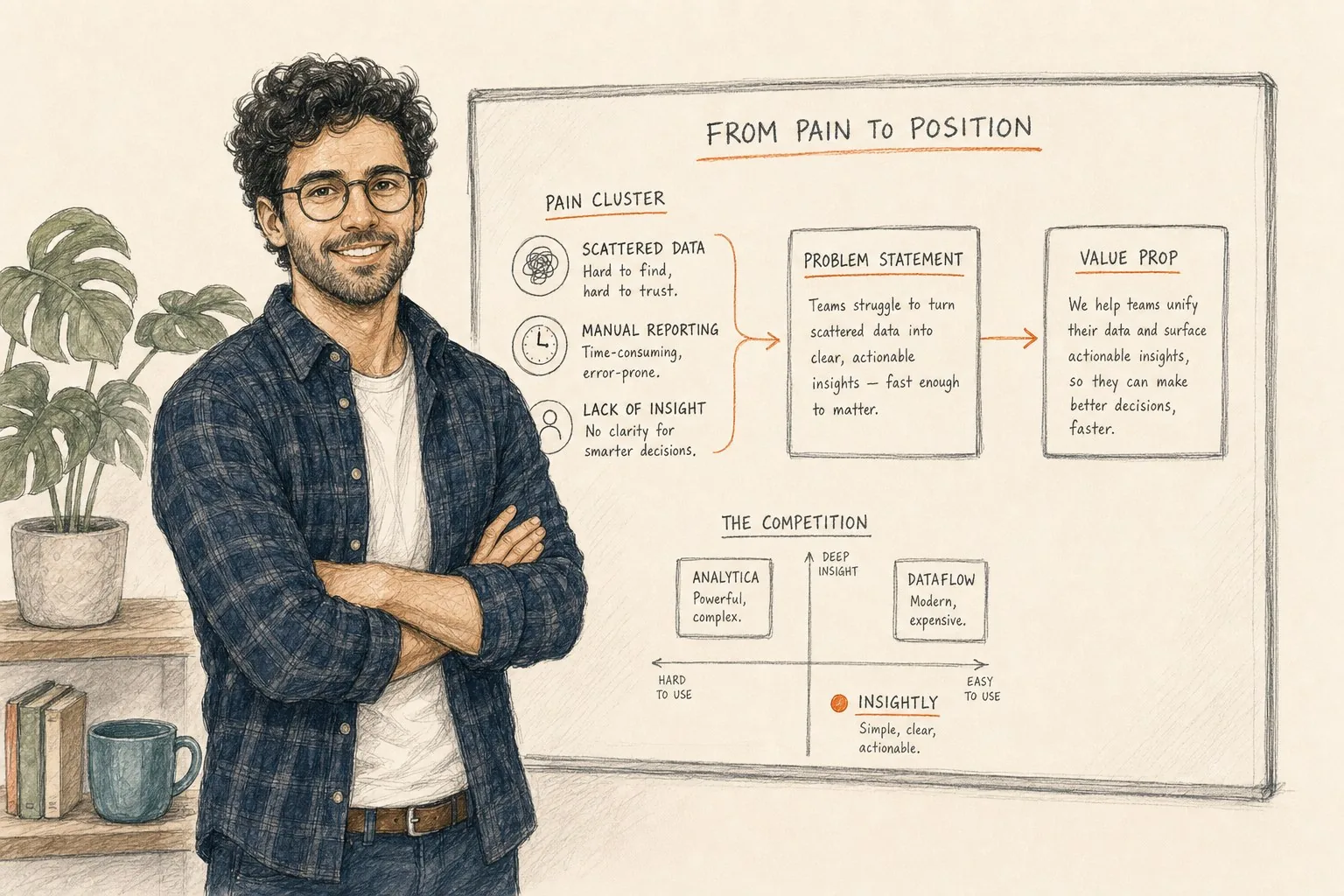
From pain to a defensible position.
The cluster crystallises into a sharp problem statement and a candidate value proposition, generated from the evidence, not drafted by hand. Then Skerpa pulls in the competitor map so Mateo can position where he's truly differentiated.
A defensible angle, not a feature list.
Does the business actually hold up?
Skerpa helps Mateo work through the model: is the segment big enough, will they pay, do the economics work? The idea he started certain about is now evidenced and viable, or honestly flagged where it isn't.
Either way, he finally knows.
 01 / 06 · the idea, grilled
you started sure. now you know.
Build fast. Prove all of it.
Build fast, capture everything, and prove every claim back to the conversation it came from. Join the skerpa founder pilot for early access.